Hydro digging is a beneficial and relatively new excavation method that more and more Australian businesses and local councils are relying on.
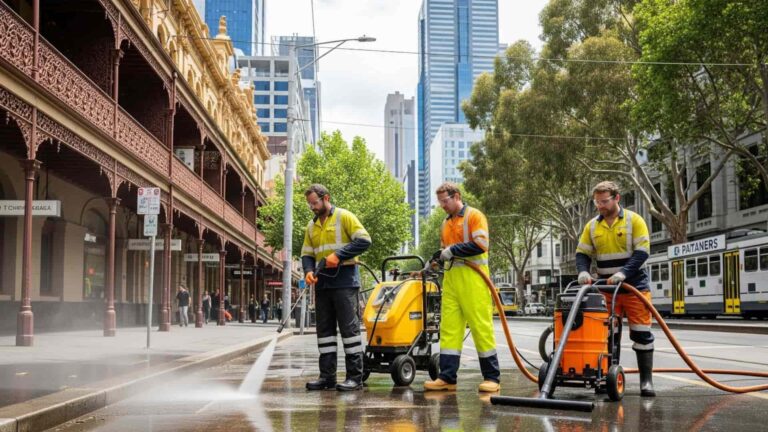
It’s a form of non destructive digging, where hydro excavation trucks use high pressure water to remove the dirt and soil above underground utilities.
This makes it different to traditional excavation methods, where the damage risk is higher.
What’s more, hydro excavation services like those offered at Enviro Choice operate with the environmental impact in mind. Even our vacuum excavation trucks function with the soil in mind.
This blog explores six benefits of hydro digging and outlines the hydro excavation process. Ultimately, it looks at why hydrovac excavation services are ideal for Australia’s underground assets.
What is Hydro Digging?
Hydro digging, also known as hydro excavation, is the process of using high-pressure water to loosen or break up the soil, and then employing a vacuum system to remove the resulting slurry or debris.
In broad terms, hydro digging involves directing pressurised water jets at the target soil, loosening it and converting it into a slurry, which is then removed via suction into a holding tank.
Hydro excavation offers benefits over other digging methods like mechanical digging because it does not severely damage all the soil in the process of moving it.
The Six Benefits of Hydro Digging with Hydro Excavation Trucks
Hydro digging with hydro excavators is often used where accuracy and minimal disturbance are essential, such as around buried utilities, in congested areas or in sensitive landscapes.
With that foundation in mind, here are six major benefits to consider for your next project.
1. Enhanced Digging Methods with Precision and Accuracy
One of the strong appeals of hydro digging is the level of precision it affords. When working on excavation projects where there are existing underground utilities, fibre-optic cables, water mains, gas lines or electrical conduits, the margin for error is minimal.
Using hydro excavation as a non destructive digging method, crews can expose these structures with far greater accuracy and digging speed.
By avoiding the indiscriminate disruption often associated with mechanical diggers and backhoes, hydro digging allows teams to target exactly what needs to be removed, and avoid what doesn’t.
Importantly, less soil is disturbed, the surrounding ground is more stable, and the hydro excavation work can proceed with greater confidence.
2. Improved Safety throughout the Excavation Process
Safety is a key concern on any excavation site. Traditional digging methods involve significant risk: heavy equipment, deep trenches, the possibility of destabilised soil, and the ever-present risk of contacts with buried services.
Hydro digging alleviates many of those concerns.
By using high-pressure water plus suction rather than large mechanical excavation equipment, hydro digging reduces physical contact with heavy machinery around the dig face.
As a result, personnel can maintain greater distance from high-risk zones.
Also, because the ground is loosened in a controlled manner rather than violently broken apart, the risk of destabilising surrounding soil is reduced.
Furthermore, underground utilities are exposed gently rather than being forcibly uncovered by mechanical tools, so the chance of inadvertently striking a live pipe or cable is diminished.
In Australian contexts—where underground infrastructure may be ageing or poorly documented—this increased safety margin is a major benefit.
3. Reduced Disruption to Surrounding Area
Whether your project is located in an urban centre, in a suburban development or in a more rural setting, the extent to which your excavation disturbs the surrounding area matters.
Hydro digging is less invasive than standard excavation. Because the process removes soil selectively and cleans up as it goes—often with minimal spoil left on site—the disturbance and need for extensive restoration are both reduced.
In practice this means fewer traffic disruptions, less upturned footpaths or roads, less damage to existing landscaping, and a smoother re-instatement process.
For example, in built-up Australian neighbourhoods where pedestrian and vehicular access must remain as uninterrupted as possible, hydro digging helps maintain a lower footprint of disruption.
It also means downstream restoration costs are lower and timelines to reopen areas are shorter.
In short, if maintaining the integrity of the surrounding environment (be it buildings, roads or vegetation) is important to your project, hydro digging offers a gentler alternative.
4. Efficiency and Time Savings Excavation Services
Time is money in any construction or installation project.
The faster key tasks are completed, the sooner downstream works can proceed, and the less risk there is of project delays causing cost overruns. Hydro digging offers efficiency advantages in several ways.
Because the process uses high-pressure water to loosen soil and vacuum equipment to remove it, the excavated material is managed continuously rather than shifting between multiple trucks, manual digging crews or repeated re-works.
For Australian conditions—whether in tough clay soils, compacted ground or sites with multiple services present—this added efficiency can help meet tighter scheduling windows and move you into subsequent phases of a project sooner.
Moreover, because the process is more targeted, less time is spent dealing with unexpected obstructions or re-work caused by utility strikes or incorrect dig locations.
5. Cost-Effectiveness Over the Project Life Cycle
While specialised equipment and processes might initially seem more expensive, hydro digging often proves cost-effective when the full project lifecycle is taken into account.
Costs saved include fewer repair or remediation works, less spoil management, reduced restoration of surface areas, fewer delays and less labour input.
From an Australian project manager’s perspective, imagine you avoid a costly emergency repair to a damaged underground service, you minimise downtime on a major roadway and you reduce the number of workers on site for a shorter period.
These factors all feed into lower overall project costs.
Moreover, by lowering the risk of disruption or damage, you reduce the likelihood of secondary costs such as design changes, schedule knock-on effects or higher insurance premiums.
Therefore, by selecting hydro digging early in your project planning, you can realise a more favourable return on investment over the full scope of works.
6. Environmentally Considerate Approach with Destructive Digging
As sustainability becomes more embedded in construction and infrastructure operations in Australia, the environmental credentials of any method carry weight.
Hydro digging aligns well with the ethos of minimal disturbance and responsible site management.
Because the process is highly targeted and minimally invasive, surrounding soil structure is better preserved, vegetation is disturbed less, and soil compaction and subsurface damage are reduced.
This means the post-excavation site is in better condition, requiring less intensive restoration and giving the environment a better chance to recover quickly.
Additionally, using water (rather than heavy mechanical disruption) tends to generate less dust, fewer vibrations and a lower level of collateral impact on adjacent operations.
For projects near sensitive environments—such as coastal zones, heritage sites or areas with mature landscaping—the lesser environmental footprint of hydro digging is a meaningful advantage.
Integrating Hydro Digging Excavation Methods into Your Project Plan
When our team at Enviro Choice consults on excavation and waste management services, we ensure that hydro digging is considered from the earliest stages due to the benefits that hydro excavation presents.
This means aligning excavation methodology with surrounding conditions, utility drawings, site access constraints and restoration expectations. Planning ahead helps capture all the benefits listed above.
It is important to communicate with all stakeholders: site owners, asset managers, utility providers, traffic controllers and restoration teams.
Since hydro digging may require water supply access, vacuum truck deployment and spoil handling, those logistics must be integrated into the schedule.
The benefits will accrue most strongly when planning is thorough and the hydro-digging contractor brings experienced crews, properly maintained equipment and a mindset oriented to precise execution.
When tendering or selecting a contractor for hydro digging services, consider factors such as the contractor’s ability to interpret utility drawings, manage spoil removal, provide remote support for confined-space works, monitor site conditions and coordinate with traffic and restoration crews.
The method is versatile across many contexts in Australia, from metropolitan utility works to industrial plant modification and remote infrastructure upgrades.
Final Thoughts
Adopting hydro digging for your next project offers a suite of advantages: enhanced precision, improved safety, reduced disruption, increased efficiency, cost-effectiveness and environmental sensitivity.
For Australian construction and infrastructure scenarios—whether you are working in city centres, suburban developments or regional operations—the benefits align with contemporary expectations for speed, safety, sustainability and reliability.
At Enviro Choice we are committed to delivering high-quality excavation and waste-management services that incorporate these modern methods.
If you’re planning a project where excavation must be carried out responsibly, accurately and with minimal operational impact, we invite you to explore how hydro digging might fit your scope of work.