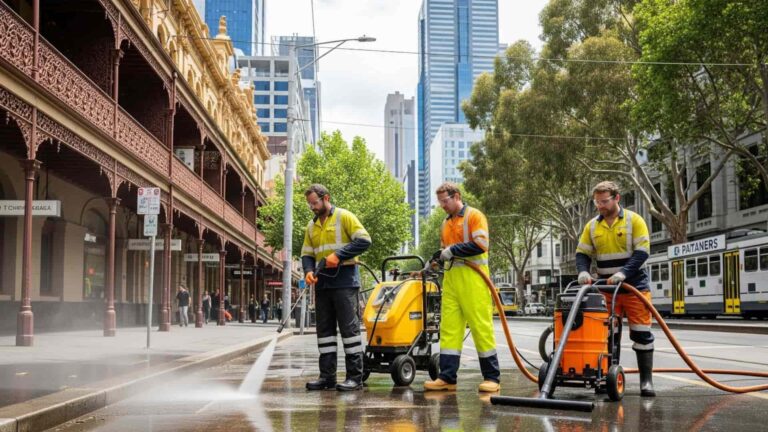
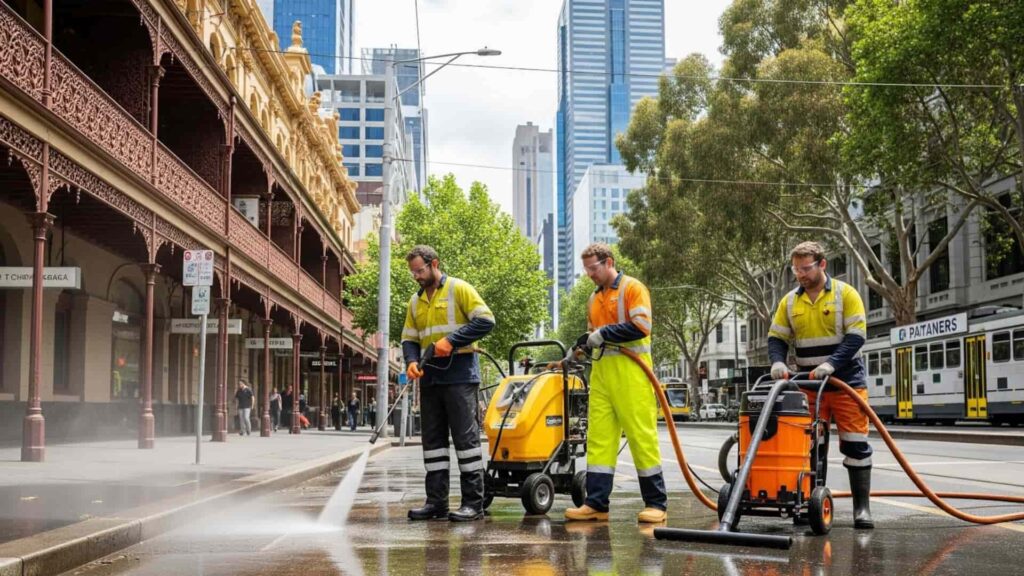
A high pressure clean with high pressure washing technology is the ideal way to start 2026 in Australia.
The summer is the time when the sun is out and people are slowly returning back from their holidays, so it’s a great time for effective cleaning large areas.
If you manage an industrial facility, commercial property, or council asset, the start of 2026 is a smart window to book professional high pressure cleaning and capture before demand spikes and schedules tighten.
In this guide, we’ll cover what “clean and capture” actually means, why early 2026 is a strategic time to act, and what to look for in a contractor so the job is done safely, efficiently, and with the right reporting.
What “High Pressure Cleaning and Capture” Means (and Why It Matters)
High pressure cleaning removes built up contaminants from surfaces using controlled, high pressure water jetting.
The capture part is just as important: it’s the process of recovering wash water and residues (for example, silt, oils, grease, or chemical residues) so they don’t enter stormwater systems or surrounding ground.
Experienced teams like us at Enviro choice come with various high pressure washer accessories and tools which are perfectly designed to remove stubborn stains from various surface areas.
We also touch on the distinct benefits of high pressure cleaning in this blog.
What a capture setup typically includes
- Containment (bunding, barriers, or surface sealing) to stop runoff spreading
- Vacuum recovery to collect wash water and suspended solids
- Filtration and separation (where appropriate) to manage solids and liquids
- Lawful disposal of recovered waste through approved channels
- Documentation to support your internal compliance and audit trail
This is particularly relevant in Australia, where environmental expectations around preventing polluted runoff are strict, and where poor washdown practices can create avoidable compliance and reputational risk.
Why Early 2026 Is a Strategic Time to Book a High Pressure Washing
Pressure washing and surface maintenance are in high demand, and market forecasts indicate continued growth into 2026 across Australia.
In practical terms, that often means tighter availability for experienced teams, especially those with proper capture and waste handling capability for higher risk environments.
1) You’ll beat the seasonal rush (and protect uptime)
Sites often schedule maintenance works early in the year to reset standards after holiday operations.
Therefore, you booking early can reduce lead times and help align cleaning with shutdown windows and planned works.
2) It’s the right moment to protect asset value and presentation
For commercial and civic assets, appearance is not just cosmetic.
A well maintained surface can help extend coating life, highlight defects earlier, and improve stakeholder confidence (tenants, customers, or community).
Industry research commonly cites property value uplifts from professional exterior cleaning in the low single digits.
While the exact impact depends on location and asset type, the principle holds: visible maintenance supports perceived value, especially when markets are active after the holiday period.
3) Compliance expectations keep tightening around runoff and waste handling
High pressure cleaning can generate wastewater that contains sediments, hydrocarbons, detergents, and other contaminants. If that runoff reaches stormwater, it can trigger investigations and remediation work you didn’t budget for.
For guidance on managing pollution risks, refer to your relevant state regulator (for example, the NSW Environment Protection Authority)
4) You can align cleaning with 2026 planning, budgets, and reporting
Facilities and council teams often finalise maintenance programs early in the calendar year.
Cleaning with capture can be scoped as a defined compliance control, not an ad hoc reactive cost.
Supplier documentation, waste tracking, and job records are easier to standardise when planned in advance.
Where High Pressure Cleaning and Capture Delivers the Biggest ROI
Not every surface needs the same approach.
The best outcomes come from matching the method (pressure, temperature, chemicals, dwell time, recovery) to the contaminant and the risk profile of the area.
Common high value applications
- Car parks and loading docks: oil staining, tyre marks, slip risk, and presentation
- Warehouses and hardstands: embedded grime, dust suppression residue, and forklift traffic lanes
- Food and beverage areas: greasy residues and hygiene sensitive surfaces (with appropriate methods)
- Plant rooms, bunds, and wash bays: built up residue where runoff control is critical
- Council footpaths and public infrastructure: chewing gum removal, grime, and safer pedestrian surfaces
- Industrial equipment exteriors: pre maintenance cleaning to enable inspections and repairs
In higher risk environments, “capture” is often the difference between a routine clean and a potential pollution incident.
What Can Go Wrong Without Capture (and How Professionals Reduce Risk)
High pressure cleaning is not just “turn on a lance and wash it away”. Done poorly, it can spread contaminants, damage surfaces, and create safety hazards.
Key risks of uncontrolled washdown
- Stormwater contamination from silt, oils, or chemical residues
- Slip hazards from wet surfaces, greasy films, or displaced debris
- Surface damage (etching concrete, lifting coatings, forcing water into joints)
- Downtime if areas must be closed for rework, incident response, or drying
- Incomplete records that make audits and internal reporting harder
What a competent team will do differently
- Assess the surface and contaminant before selecting pressure and nozzle setup
- Plan containment so water does not migrate to drains or sensitive areas
- Recover wastewater and residues as part of the job, not as an afterthought
- Use fit for purpose plant and PPE, with site specific safety controls
- Provide clear reporting so you can demonstrate due diligence
If there’s any possibility of hazardous residue or regulated waste, the right answer is to engage qualified professionals rather than attempting in house cleaning.
What to Expect From an Enviro Choice Style “Clean and Capture” Process
At Enviro Choice, high pressure clean and capture sits within a broader capability for complex waste problems and compliance led site services.
The goal is simple: clean thoroughly, capture what’s removed, and manage waste responsibly.
Step 1: Site assessment and scope
- Identify contaminants (for example, hydrocarbons, silt, grease, or chemical residues)
- Confirm drainage paths, sensitive receptors, and access constraints
- Set success criteria (cleanliness standard, slip reduction, pre coating prep, etc.)
Step 2: Safety and environmental controls
- Traffic and pedestrian management where required
- Containment planning to prevent runoff to stormwater
- Selection of cleaning method to minimise surface damage and overspray
Step 3: High pressure cleaning with active capture
- Clean in controlled sections to maintain recovery effectiveness
- Vacuum recover wash water and residues during cleaning
- Keep the work area safe and operational where possible
Step 4: Waste handling and documentation
- Manage recovered solids and liquids through appropriate waste streams
- Provide job records that support internal reporting and compliance checks
- Recommend follow up maintenance intervals based on site conditions
To discuss a scope or request pricing, visit Enviro Choice and request a quote.
Hiring Checklist: How to Choose the Right High Pressure Cleaning and Capture Team
If you’re comparing providers for early 2026, use a checklist that prioritises safety, compliance, and capability, not just pressure output.
Questions to ask before you book
- Can you capture and recover all wash water? If “no”, ask how they prevent runoff entering stormwater.
- How do you manage recovered waste? Look for clear, compliant waste pathways and documentation.
- What experience do you have on similar sites? Industrial, food, civil, or council environments each have different constraints.
- How will you protect surfaces? A good contractor will explain pressure ranges and methods, not just “we can blast it”.
- What safety controls are included? Expect traffic management, isolation where required, and a practical SWMS approach.
- What reporting will we receive? Photos, job summary, and waste documentation where applicable.
A Practical Example: Preventing Runoff Issues in a High Traffic Area
Consider a typical scenario: a loading area with visible oil staining, sediment build up near drains, and constant vehicle movement.
A basic pressure wash might shift contaminants directly toward stormwater inlets, creating risk and leaving you with an incident to manage.
A clean and capture approach allows the area to be cleaned in stages, with containment and vacuum recovery active throughout.
The result is a cleaner surface, reduced slip risk, and better confidence that residues have been recovered rather than redistributed across the site.
When Cleaning Becomes an Emergency: Know the Line
Some situations are not “maintenance”. If you have a chemical spill, fuel release, or unknown residue, treat it as an incident and engage a qualified emergency response team.
Enviro Choice provides 24/7 emergency spill response to help contain and remediate incidents quickly and compliantly.
Next Step: Book Early, Reduce Risk, and Start 2026 Clean
If you’re planning maintenance for the start of 2026, the most practical move is to scope your high pressure cleaning needs now, then book a team that can deliver cleaning and runoff control. That combination protects your people, your assets, and your compliance position.